
NAC: The Powerful Supplement That Supports Detox, Hormones, Brain Health, and Longevity
What Is NAC and Why Is Everyone Talking About It?
If you’ve spent any time researching health, longevity, or detoxification, you’ve likely come across NAC, short for N-Acetyl Cysteine.
While NAC has been used in hospitals for decades as a treatment for acetaminophen (Tylenol) overdose, it’s increasingly gaining attention for its broader health benefits. From supporting liver function and hormone balance to improving mental clarity and protecting against aging, NAC has become one of the most researched supplements in functional and preventative medicine.
But what exactly is it, and why does it matter?
Let’s dive in.
What Is NAC?
NAC is a supplemental form of the amino acid L-cysteine, which is naturally found in foods such as:
Eggs
Chicken
Turkey
Fish
Garlic
Legumes
What makes NAC unique is that it serves as a precursor to one of the body’s most important protective compounds: glutathione.
Glutathione is often referred to as the body’s master antioxidant because it plays a critical role in:
Neutralizing free radicals
Supporting liver detoxification
Reducing inflammation
Protecting cells from damage
Supporting immune function
Maintaining healthy hormone balance
As we age, our glutathione levels naturally decline. NAC helps replenish those levels, allowing the body to better defend itself against the stressors of modern life.
The Connection Between NAC and Glutathione
Every day your body produces energy through tiny structures inside your cells called mitochondria.
As a byproduct of energy production, the body also generates free radicals—unstable molecules that can damage cells, tissues, and DNA when they accumulate.
This process is known as oxidative stress.
Think of oxidative stress like rust forming on metal. Over time, it contributes to:
Fatigue
Brain fog
Chronic inflammation
Accelerated aging
Heart disease
Diabetes
Neurodegenerative disorders
Glutathione acts as the body’s natural defense system against oxidative stress.
Because NAC provides the raw materials needed to create glutathione, it helps your body maintain optimal antioxidant protection and cellular resilience.
How NAC Supports Liver Detoxification
Your liver is responsible for processing and eliminating:
Environmental toxins
Alcohol
Medications
Food additives
Heavy metals
Excess hormones
The detoxification process occurs in two phases:
Phase 1: Breakdown
The liver breaks toxins into intermediate compounds.
Phase 2: Elimination
Those compounds are converted into water-soluble substances that can be excreted through urine and stool.
Glutathione is essential for Phase 2 detoxification.
Without adequate glutathione, toxins may linger in the body and recirculate through the bloodstream.
This can contribute to symptoms such as:
Fatigue
Brain fog
Bloating
Digestive issues
Skin problems
Hormonal imbalances
By supporting glutathione production, NAC helps the liver process and eliminate toxins more efficiently.
NAC and Hormone Balance
One of the most overlooked benefits of NAC is its role in hormone health.
Hormones don’t just need to be produced—they also need to be cleared from the body once they’ve done their job.
When detoxification pathways become sluggish, hormones can accumulate and contribute to imbalance.
Signs of Hormonal Imbalance
Women may experience:
PMS
Heavy or painful periods
Breast tenderness
Mood swings
Acne
Bloating
Weight gain
Men may experience:
Low energy
Reduced libido
Increased belly fat
Difficulty building muscle
Mood changes
By supporting healthy liver function and estrogen metabolism, NAC may help the body maintain healthier hormone balance.
Can NAC Support Testosterone?
Research suggests that oxidative stress can negatively impact the cells responsible for testosterone production.
By reducing oxidative stress and supporting cellular health, NAC may help:
Preserve testosterone production
Improve energy levels
Support motivation and drive
Enhance exercise recovery
Promote overall hormonal resilience
While NAC is not a replacement for testosterone therapy when medically necessary, it may provide valuable support for men looking to optimize their health naturally.
NAC and Women’s Health
NAC has received significant attention for its potential role in supporting women with Polycystic Ovary Syndrome (PCOS).
Research has shown NAC may help:
Improve insulin sensitivity
Promote regular ovulation
Support fertility
Reduce oxidative stress
Improve metabolic health
Because PCOS often involves inflammation, insulin resistance, and hormonal imbalance, NAC’s antioxidant properties make it an intriguing supportive option.
Women pursuing fertility treatments have also shown interest in NAC because of its potential effects on egg quality and reproductive health.
NAC for Brain Health and Mental Clarity
The benefits of NAC extend far beyond the liver.
Researchers are increasingly studying NAC’s effects on the brain due to its influence on neurotransmitters and inflammation.
NAC helps regulate glutamate, an important neurotransmitter involved in:
Focus
Mood
Emotional regulation
Cognitive performance
Emerging research suggests NAC may support individuals experiencing:
Brain fog
Chronic stress
Anxiety
Depression
OCD
PTSD
By reducing oxidative stress in the brain and supporting neurotransmitter balance, NAC may help improve mental clarity and emotional resilience.
Respiratory and Immune Support
NAC is also known for its ability to support respiratory health.
It works as a mucolytic agent, meaning it helps thin and break down mucus.
This is one reason NAC has been used in clinical settings for conditions such as:
Chronic bronchitis
COPD
Asthma
Cystic fibrosis
Additionally, glutathione plays an important role in immune function.
Healthy glutathione levels help immune cells respond more effectively to infections and inflammation.
NAC and Healthy Aging
If there is one reason NAC has become a staple in longevity circles, it’s because it addresses two major drivers of aging:
1. Oxidative Stress
Oxidative damage accumulates over time and contributes to nearly every chronic disease associated with aging.
2. Chronic Inflammation
Persistent low-grade inflammation accelerates tissue damage and disease progression.
By supporting glutathione production, NAC may help:
Protect DNA from damage
Support healthy mitochondrial function
Preserve cognitive performance
Promote cardiovascular health
Improve recovery
Enhance overall resilience
In short, NAC helps support not just lifespan—but healthspan.
Healthspan refers to the number of years you remain healthy, active, and independent.
That’s a goal worth pursuing.
How Much NAC Should You Take?
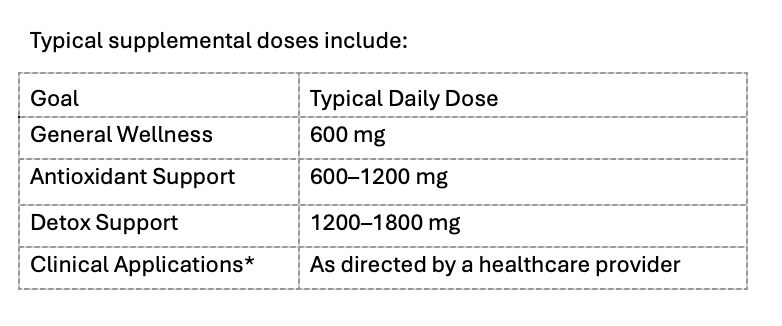
*Always consult your healthcare provider for individualized recommendations.
Many people take NAC on an empty stomach, although it can also be taken with a light meal if digestive discomfort occurs.
Potential Side Effects
NAC is generally well tolerated, but some individuals may experience:
Nausea
Upset stomach
Headache
Mild digestive discomfort
Individuals taking blood pressure medications, blood thinners, or those with active ulcers should consult their healthcare provider before starting NAC supplementation.
The Bigger Picture: NAC Is a Tool, Not a Magic Pill
One of the most important lessons in health is that no supplement can replace foundational habits.
NAC can be a powerful addition to a healthy lifestyle, but it works best when combined with:
Quality sleep
Regular exercise
Strength training
Whole-food nutrition
Stress management
Adequate protein intake
Reduced exposure to environmental toxins
Health isn’t created by a single supplement.
It’s created by consistently making choices that support your body’s ability to function as it was designed.
NAC simply helps strengthen one of the body’s most important protective systems.
Final Thoughts
N-Acetyl Cysteine may be one of the most versatile supplements available today.
Its ability to support glutathione production gives it far-reaching benefits for:
Liver detoxification
Hormone balance
Brain health
Immune support
Respiratory function
Healthy aging
While no supplement is a cure-all, NAC offers a science-backed way to help your body defend itself against the stressors of modern life.
If your goal is to improve your energy, support long-term health, and optimize how you age, NAC may be worth discussing with your healthcare provider.
