
Have you ever thought you were eating plenty of protein, then looked a little closer at what was on your plate? Two tablespoons of peanut butter and four ounces of cooked chicken breast each have about 190 calories. The peanut butter gives you about 7 grams of protein. The chicken gives you 35.
That difference gets at a question I’ve been asking in my nutrition classes lately. If you feel full before you’ve eaten enough protein, or you find yourself eating past fullness to reach your goal, what could you change about the meal itself?
I like to start with two things you can look for at your very next meal.
Sumn Tip #1: Give your muscles the building blocks they need
When you eat protein, your body breaks it down into amino acids. Nine of those are called essential because you need to get them from food. One of the nine, leucine, does double duty. Along with serving as a building block, it helps signal your muscles to start making new muscle protein. Eggs, fish, chicken, lean beef, and dairy all supply leucine along with the other essential amino acids.
As we get older, our muscles can become less responsive to small servings of protein. For many adults, roughly 25–40 grams of protein at a meal is a useful planning range. Where you fall in that range depends on your body size, activity level, and individual needs.
What does that look like at breakfast? Two eggs provide about 13 grams of protein. If eggs are already part of your routine, try serving them with half a cup of plain nonfat Greek yogurt and some berries. The eggs and yogurt together bring you to about 25 grams, with one small change to a meal you already enjoy.
Sumn Tip #2: Look at protein per calorie
When I talk about protein efficiency, I’m asking a simple question. How much protein does a food give you for the calories you eat?
The middle columns show what you get in a familiar serving. The last column lets you compare the foods at the same number of calories.
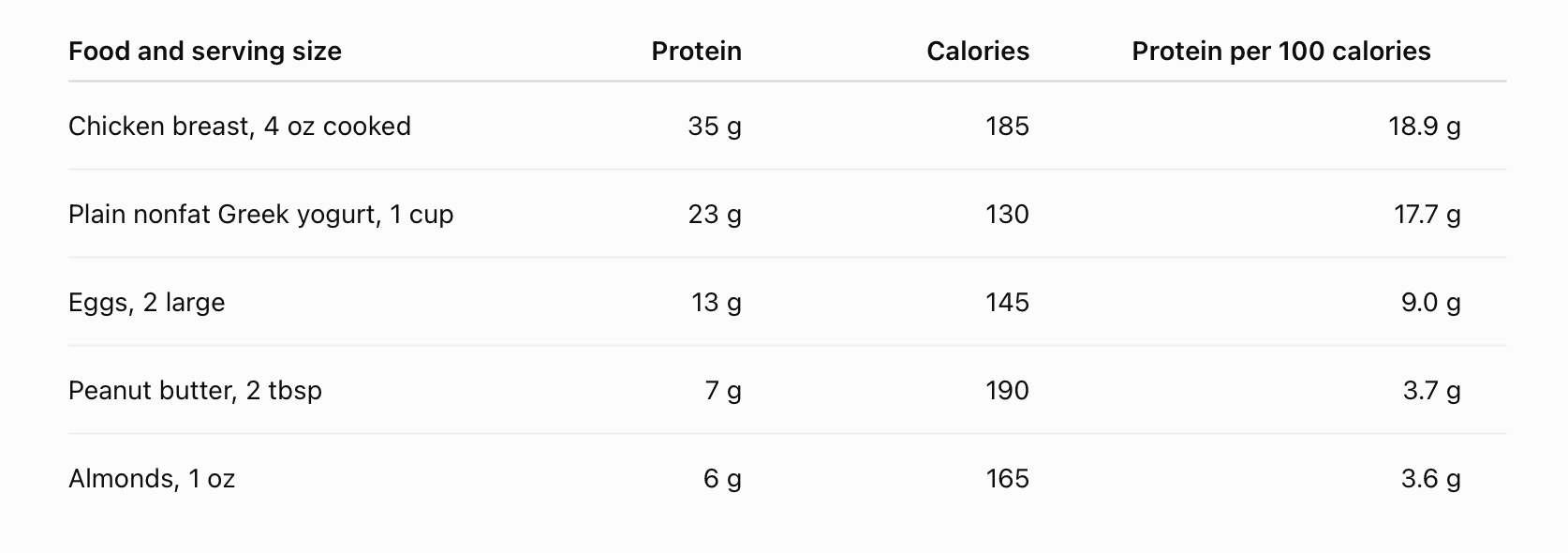
Values are approximate and vary by brand and preparation.
Look at the yogurt and almonds. A cup of Greek yogurt provides nearly four times the protein of an ounce of almonds. Both can have a place in the same breakfast. Let the yogurt supply most of the protein and sprinkle almonds on top for crunch, fiber, and fat.
Try this at your next meal. Choose your main protein source first, then build the meal around it. If you tend to fill up quickly, try eating some of that food first while you still have an appetite. If you’re comfortably full at the end of a meal but often come up short on protein, use the table to change what goes on your plate before increasing your portions.
What are you staying strong for?
I often remind people that we exercise to be better at living. I think about nutrition the same way. Twenty-five grams of protein at breakfast means a lot more when you connect it to something you want to keep doing, like getting up from the garden, carrying groceries up the steps, or saying yes when someone invites you on a hike.
My challenge for you this week is to take a second look at one meal you eat often. What food supplies most of its protein? How much does your usual serving give you? Pick one change that fits your appetite and tastes good enough to make again tomorrow.
The author, Rob Sumner, is a Doctor of Physical Therapy, Athletic Trainer, Certified Strength & Conditioning Specialist. He is the owner of Specialized Strength Fitness, Specialized Massage and Specialized Physical Therapy in Colville. He's happy to answer any questions about this article, wellness, fitness, or your health overall by phone at (509) 684-5621 or by email at Rob@SumnerPT.com
